Precision in Dosing Bulk Materials

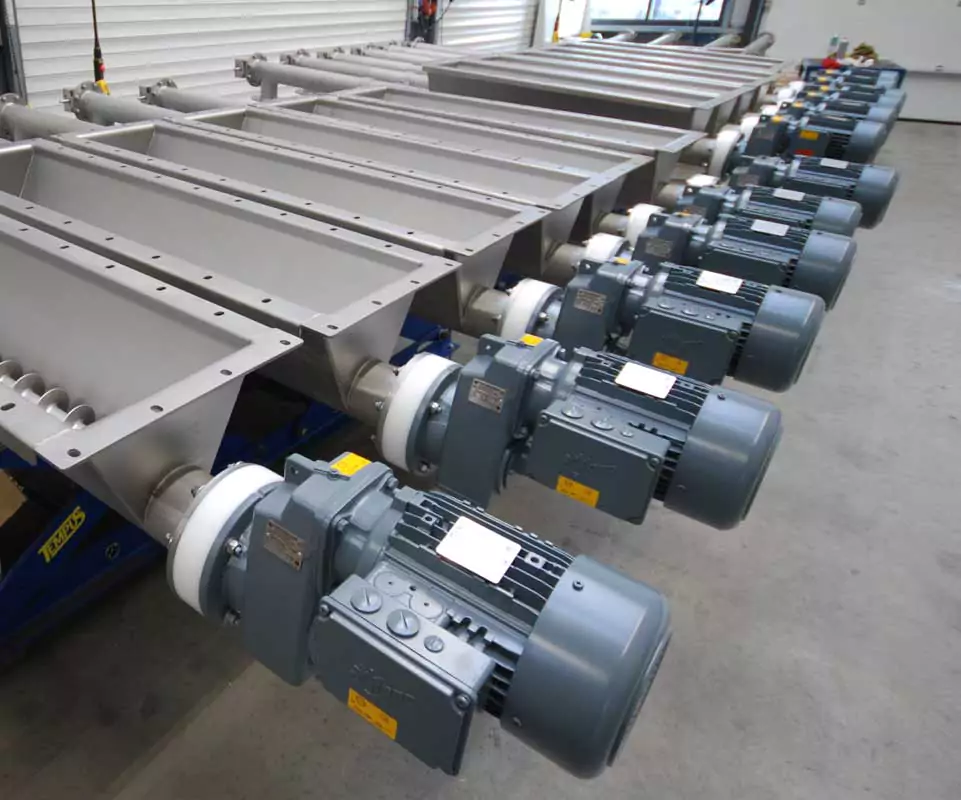
In production processes involving powders, granulates, or other bulk materials, accurate and consistent dosing is crucial. A dosing screw ensures a controlled material feed, safeguarding product quality and process stability. By selecting the right dosing screw, you prevent disruptions and maximize the efficiency of your installation.
Doseerschroeven
See the benefits
Doseerschroeven

Dosing with Dosing ScrewsAccurate dosing as a key factor in efficiency and safety

Dosing is all about precision. Companies can lose hundreds of thousands of euros annually due to inaccurate dosing of ingredients required in a specific product. Worse yet, consumer safety could be at risk if too much of a certain additive ends up in the product. In a process where dosing accuracy is the highest priority, a gravimetric or volumetric feeder may become a necessary choice over a standard dosing screw.

Discuss technical advice or options?

  • Designing technical innovations
  • Engineered for accurate dosing
  • Simple
  • Low energy consumption

Essential Solution for Controlled Bulk Material Feeding What are Dosing Screws?

Dosing screws are specifically designed to dose bulk materials and are typically located at the start of a process. They ensure a controlled supply of materials such as powders and granulates, which is essential for consistent production processes.

Application and Strength of Klinkenberg Dosing Screws

Dosing screws are used across various industries where accurate dosing of bulk materials is required, such as the chemical, food, and pharmaceutical industries. They are ideal for handling powders, granulates, and other bulk goods that require controlled feeding.

Advantages of Klinkenberg Dosing Screws

icon check

Custom-Made

Designed according to the customer's specific needs, ensuring optimal integration into existing processes.

icon check

Durability

Made from high-quality materials for a long lifespan and minimal maintenance requirements.

icon check

Innovative Design

Crafted with attention to detail and finish, resulting in reliable and efficient dosing solutions.

How to Choose the Right Dosing Screw

The selection of a dosing screw depends on multiple factors, including:

Properties of the Bulk Material

The flow characteristics, moisture content, and particle size of the material determine which screw configuration is most suitable.

Required Dosing Accuracy

For precision applications, screws with fine pitch or twin-blade designs are often more effective.

Capacity Requirements

Based on the required throughput and material volume per time unit, the screw size and shape are defined.

Material Selection

Depending on the application, screws are manufactured from stainless steel or wear-resistant materials to minimize corrosion and wear.

doseerschroeven

Dosing with Tubular or Trough Screw Conveyor

The choice between a trough dosing screw and a tubular dosing screw depends on customer preferences and the characteristics of the product to be dosed. The right design of the dosing housing is primarily determined by the type and specifications of the bulk material. For frequent product changes, a trough dosing screw with hinged covers is often the best solution.

  • Precision through twin dosing screw blades
  • Simple design
  • Easy to maintain
  • Compact design
image

Tubular Dosing Screw: Economical and Practical

Although a trough model offers advantages, there are also limitations that can influence the choice. A tubular dosing screw is generally the most economical option. This model is better suited to materials with watery flow behaviour and can even operate under slight overpressure without releasing odours into the production environment.

image

Customer-Specified Dosing Screws

Dosing screws are designed to meter bulk materials and are usually located at the start of a process. Discharging bulk solids from silos, hoppers, or bunkers can often lead to erratic dosing and flow issues such as bridging or rat-holing. To combat these challenges, we offer various solutions tailored to the customer’s requirements.

The volumetric dosing capacity can be precisely controlled. By using a variable-speed drive, dosing accuracy and capacity can be increased even further. Because the screw inlet is fully loaded, the shaft seal becomes a critical component that must be carefully considered by the designer.

Klinkenberg

ConclusionPrecision and customization for optimal process control

Dosing screws are essential for processes that require accurate and controlled metering of bulk materials. With Klinkenberg’s expertise and custom solutions, you can rely on dosing screws that meet your specific needs, contributing to a more efficient and reliable production process.

We’re happy to assist

Klinkenberg offers several sealing technologies that can be applied to our dosing screws. The screws are available in various sizes, lengths, and configurations, and can be manufactured from different grades of steel.

Request a quote

Applied Technologies We always choose the right technology for your process

Klinkenberg technologies include the following variations:

  • ATEX
  • Finish
  • Welding
  • Bearings
  • Seals
image

Technology, finish, and safety

Would you like to learn more about the applied technologies for screw conveyors, such as bearings, seals, safety, ATEX compliance, or desired finish?

Discuss the possibilities Discover more

Variants

Dosing Cocoa Beans

Multi-screw dosing
When dosing cocoa beans, the screw shafts experience excessive wear. By using materials such as Hardox500, the lifespan of the dosing screw can be significantly extended.

image

Bag Tipping with Dosing Screw

Bag Tipping System
Supply of two feed screws placed under a 150-liter bag tipping cabinet. The cabinet is used to dose powdered products into dissolution vessels.
image

1000-Litre Hopper Dosing Screw

Dosing from a hopper
In dosing, it’s crucial that the required capacity remains stable. With proper screw design, this is entirely feasible — naturally considering all factors influencing dosing accuracy.

image

Dosing Screw under Agitator

Conditioning for dosing
Buffering and handling bulk solids with poor flow characteristics is typically difficult using conventional methods. Applying an agitator inside the hopper effectively solves this problem.

image

Documentation Exclusive with a personal design

Explore detailed information about Klinkenberg dosing screws, including specifications and applications. Download the PDF for even more insights.

FAQ Direct answers to your questions

Quickly find answers to frequently asked questions about dosing screws. Our FAQ section helps you make the right choice.

Is your question not listed?
Feel free to send us a message with your question.

Contact us

Coarse dosing refers to quickly adding larger quantities with less precision, while fine dosing focuses on accurate and controlled dispensing of smaller amounts. Klinkenberg’s dosing screws are suitable for both methods.

Dosing screws are suitable for a wide range of materials such as powders, granulates, and other bulk solids. The right configuration depends on the material’s properties.

• Clogging and bridging: Sticky or hygroscopic powders can accumulate and block flow. This can be addressed with adjusted screw geometry or vibration mechanisms.
• Inaccurate dosing: Caused by variations in material properties or lack of calibration. Regular maintenance and proper screw tuning help prevent this.
• Component wear: Abrasive materials can wear down screw blades. Using wear-resistant materials or coatings can extend lifespan.
• Improper material selection: Choosing the wrong material (e.g. stainless steel vs. carbon steel) may lead to corrosion or product contamination.

The choice depends on factors such as abrasiveness, moisture, and chemical properties of the material. Klinkenberg offers advice and custom solutions to help select the optimal material.

The pitch (distance between screw blades) determines how much material is conveyed per revolution. A smaller pitch enables more accurate dosing, while a larger pitch offers higher throughput.

Thanks to robust design and high-quality materials, Klinkenberg dosing screws require minimal maintenance. However, regular inspection and cleaning are important to prevent malfunctions.

The screws are designed for high dosing precision, even with difficult materials. Proper calibration and design ensure consistent and reliable performance.

Larger diameters increase capacity as more material is moved per revolution. For finely metered quantities, smaller diameters are often preferred.

A single-blade screw is simpler and suited for standard applications, while a double-blade design offers greater control — especially for cohesive or clumpy materials.